- The Wolf on Wealth
- Posts
- The Lego Smart Brick
The Lego Smart Brick
LEGO proves you don't need cheaper products or faster innovation. You need products customers can't abandon without losing their entire investment.

Jordan Belfort
January 09, 2026

👋 Good Morning. LEGO may have just solved the problem every parent faces: how to get kids off screens without losing their attention. Here's how.
Read time: 3 minutes | 624 words
STORY
🧱 Introducing the Lego Smart Brick
In 1932, Danish carpenter Ole Kirk Christiansen was desperate. Depression-era families weren't buying furniture. He pivoted to wooden toys, naming his company from "leg godt" (play well).
The gamble nearly bankrupted him twice.
Everything changed in 1958. LEGO perfected the interlocking brick with tubes underneath, creating "clutch power" that made every brick compatible forever. A 60-year-old brick still connects with today's pieces.
But individual bricks weren't enough.
The real money came from themed sets that told stories. The 1978 Yellow Castle launched their castle empire. Train sets and space series followed. Kids didn't just want bricks, they wanted worlds to build.
Then came the franchise revolution.

In 1999, LEGO signed Star Wars. Revenue exploded as licensing became their goldmine. Today's top sellers prove the strategy works:
Millennium Falcon (75192): $850 Ultimate Collector Series flagship
Rivendell (10316): $500 Lord of the Rings masterpiece with 15 minifigures
Gringotts Bank (76417): Harry Potter's detailed wizarding world
Avengers Tower: Marvel's latest bestseller for superhero fans
Pretty Pink Flower Bouquet: $50 hit targeting adult collectors
Game Boy: Functional nostalgia piece for retro gamers
LEGO transformed from toy company into an $8+ billion entertainment and lifestyle empire.
Success created new challenges: sustainability and digital competition.
With 400 billion plastic bricks on Earth, LEGO tackled the environmental crisis first. Their "Built for Tomorrow" initiative achieved 50% sustainable materials by 2024. They're investing $1.4 billion toward 100% sustainability by 2030.
Now they're solving the screen problem.
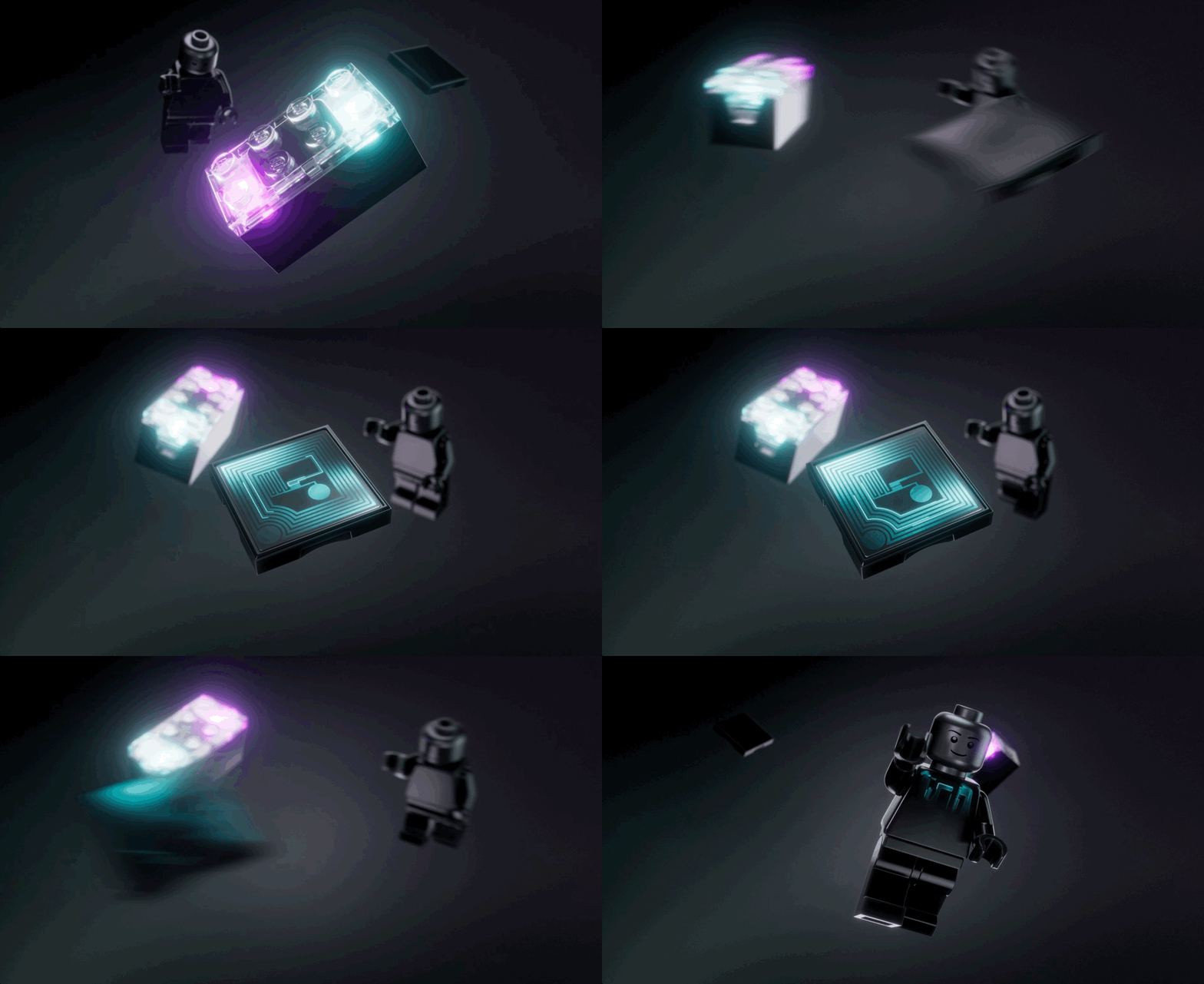
At CES 2026, LEGO unveiled the Smart Play platform with sensor-packed Smart Bricks launching this spring. The innovation adds interactive lights and sound to physical play without requiring screens (Wired).
The first collection features Star Wars sets. Minifigures react to events. Bricks communicate with each other. Lightsabers glow and hum authentically.
It's LEGO's answer to a generation raised on tablets: make analog toys smarter, not digital.
The business logic is clear. Parents want kids off screens. Kids want interactivity. LEGO's Smart Brick delivers both while protecting their core moat, the physical brick ecosystem.
From wooden toys to smart sensors, from near-bankruptcy to $8+ billion empire, LEGO keeps reinventing how the world plays.
The carpenter's son who named his company "play well" would recognize the mission, if not the technology.
UPCOMING LIVE EVENTS

INSIGHT
🧠 Don't Sell Products. Build Ecosystems.

The Insight: Ole Kirk Christiansen nearly went bankrupt twice before adding tubes underneath plastic bricks in 1958. That created "clutch power" where every brick works with every other brick forever. Then in 1999, LEGO signed Star Wars. Adults started spending $850 on sets. Result? 400 billion bricks on Earth and an $8+ billion empire.
1. Engineer Lock-In Through Backwards Compatibility
LEGO's smartest move wasn't the brick. It was making sure the brick never changed. Every innovation since 1958 works with every brick ever made. Your grandfather's 1978 Yellow Castle connects to today's 2026 Smart Bricks.
Action: Audit your roadmap. How many "improvements" force customers to abandon previous purchases? Stop. Make every new version enhance the old version. Make leaving your ecosystem painful.
2. Price Nostalgia Like Assets, Not Toys
LEGO figured out adults pay 17x more than kids. Same plastic bricks. Different customer psychology. Premium pricing because it's not a purchase, it's an emotional investment.
Action: Identify products that trigger nostalgia or status. Triple the price. Add "limited edition." One $850 Millennium Falcon equals 170 basic sets in revenue.
LEGO proves you don't need cheaper products. You need products customers can't abandon without losing their investment.
MEMES
@simon_lego_collector Lego smart bricks. Good idea but I imagine they'll be super expensive #lego #Meme #MemeCut #CapCut